



Robot Fingers Get Dexterity Upgrade
Even the most complex robotic arms used in manufacturing can’t match the dexterity a human displays when flipping a pencil or lightly readjusting grip on a tool without letting it go.
There’s a lot of intuition and latent understanding of physics that goes into something as simple as changing your grip on a screwdriver while you’re using it. A slight decrease in grip strength and slide of the fingers into a new position might be needed. You might use the screw’s slotted head to help support the driver while you readjust. Without realizing it, your brain is directing fine control of your muscles by processing a number of factors like the friction between fingers and object, the effects of gravity and the object’s weight and shape.
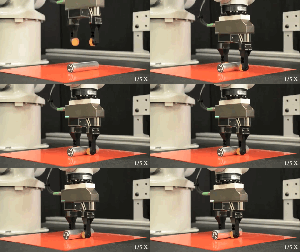
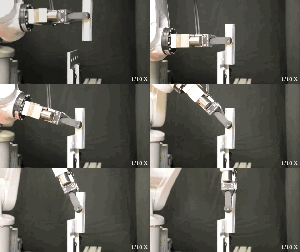
Now MIT engineers say they’re developing models to let industrial robots use their environment to help clunky grippers better manipulate objects in their clutches. “We’re sort of outsourcing that dexterity that you don’t have in the gripper to the environment and the arm,” said mechanical engineer Alberto Rodriguez. “Instead of dexterity that’s intrinsic to the hand, it’s extrinsic, in the environment.”
 GigiopixTumblr