
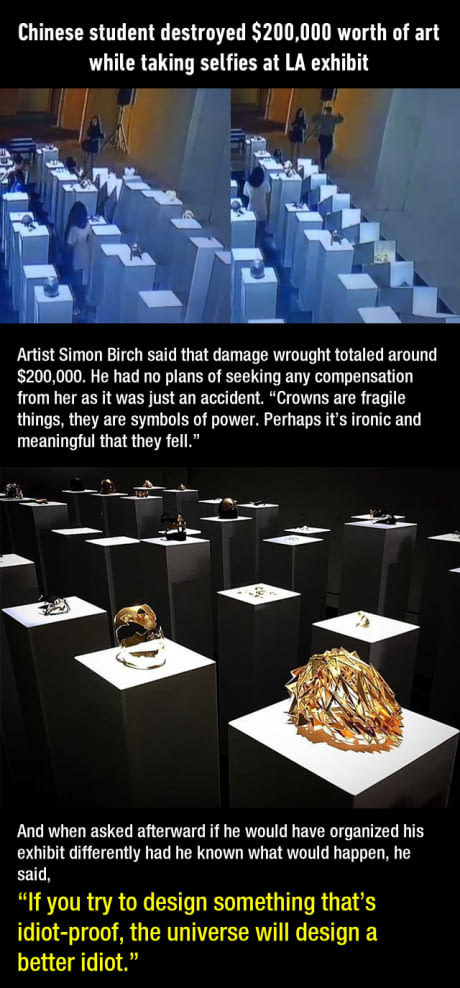
Nice response from the artist
Lo diceva anche il mi’ babbo, quando montava sistemi di sicurezza su macchine industriali: “il cretino sara’ sempre piu’ ingegnoso delle precauzioni che prendi per impedirgli di farsi male”.
Nice response from the artist
Lo diceva anche il mi’ babbo, quando montava sistemi di sicurezza su macchine industriali: “il cretino sara’ sempre piu’ ingegnoso delle precauzioni che prendi per impedirgli di farsi male”.



The Capela dos Ossos Bone Chapel is an ossuary located in Faro, Portugal. The chapel is built entirely from the human bones of more than 1000 monks. As well as the walls being covered in human skeletons and skulls, there is a single complete skeleton covered in gold which hangs from the front of the chapel. An inscription above the entrance translates to:
“Stop here and consider, that you will reach this state too.”


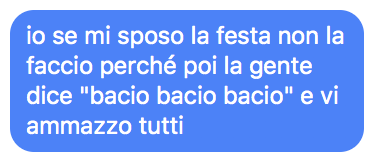
L’argomento di oggi è “sposalizio” e dedico di dire la mia col mio solito modus vispo e diretto con un pizzico di allegria

Ci ho già provato anni fa, ma ormai i sei gradi di separazione sono diventati uno o due al massimo, quindi ci riprovo.
O GENTI DELL’INTERNET TUTTA
Chi di voi ha una vaga idea di cosa sia, di cosa rappresenti il quadro in foto?
Grazie mille.
Intanto rebloggo poi faccio una corsa contro al tempo per capirlo prima degli altri.
A mericorda la battaglia di Anghiari, ma non è.
ecchilo
https://it.wikipedia.org/wiki/Battaglia_delle_Amazzoni#/media/File:Peter_Paul_Rubens_007.jpg
la battaglia delle amazzoni
Comunque anche a me ricordava la Battaglia di Anghiari. Di cui tra l’altro, la copia piu famosa e’ proprio di Rubens, visto che l’originale di Leonardo e’ andato perso. Lo stile e’ lo stesso.

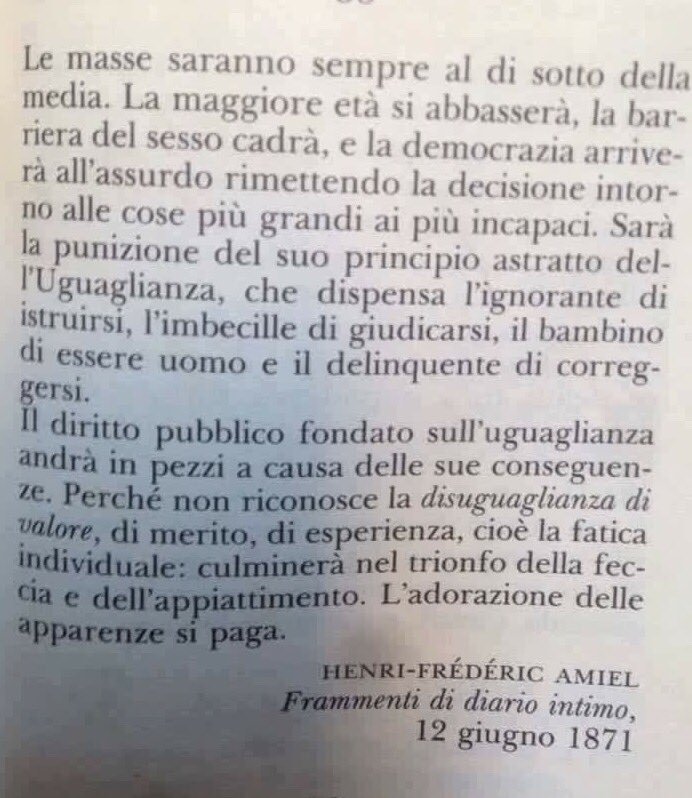
Severo ma giusto pic.twitter.com/aTT9kfJzHi
— inscatolato (@inscatolato) 20 agosto 2017
Severo ma giusto, e anche tristemente (parecchio) corretto.
“Lo operiamo dove?” “Non so, votiamo nell ospedale e si decide”
Ci vogliono meccanismi che assicurino che la mia ignoranza valga meno della tua competenza (Asimov), almeno in certi ambiti.
Non lo reblogghero’ mai abbastanza, questo.

Ma non erano velenosi gli ornitorinchi? Non hanno il pungiglione? Li tiene in mano cosi’ ?
Please, never let this meme die.
This is the best one I’ve seen so far
What kind of quantum fucking memeing from 2056 are you people beaming to us


When customers walked into Edeka supermarket in Hamburg recently, they were surprised to find that the shelves were almost empty, and the small handful of products that remained were all made in Germany. It seemed like the supermarket had simply forgotten to restock their produce until customers saw the mysterious signs left around the shop. “So empty is a shelf without foreigners,” read one sign at the cheese counter. “This shelf is quite boring without variety,” read another.
It turns out that Edeka, in a rather controversial move, had opted to solely sell German food for a day in order to make a powerful statement about racism and ethnic diversity. As a result, there were no Greek olives, no Spanish tomatoes, and very little of anything else that can normally be found in a typical modern household. “Edeka stands for diversity, and we produce a wide range of food in our assortment, which is produced in the different regions of Germany,” said an Edeka spokesman. “But it is together with products from other countries that we create the unique diversity that our customers value.” (Source)

 GigiopixTumblr