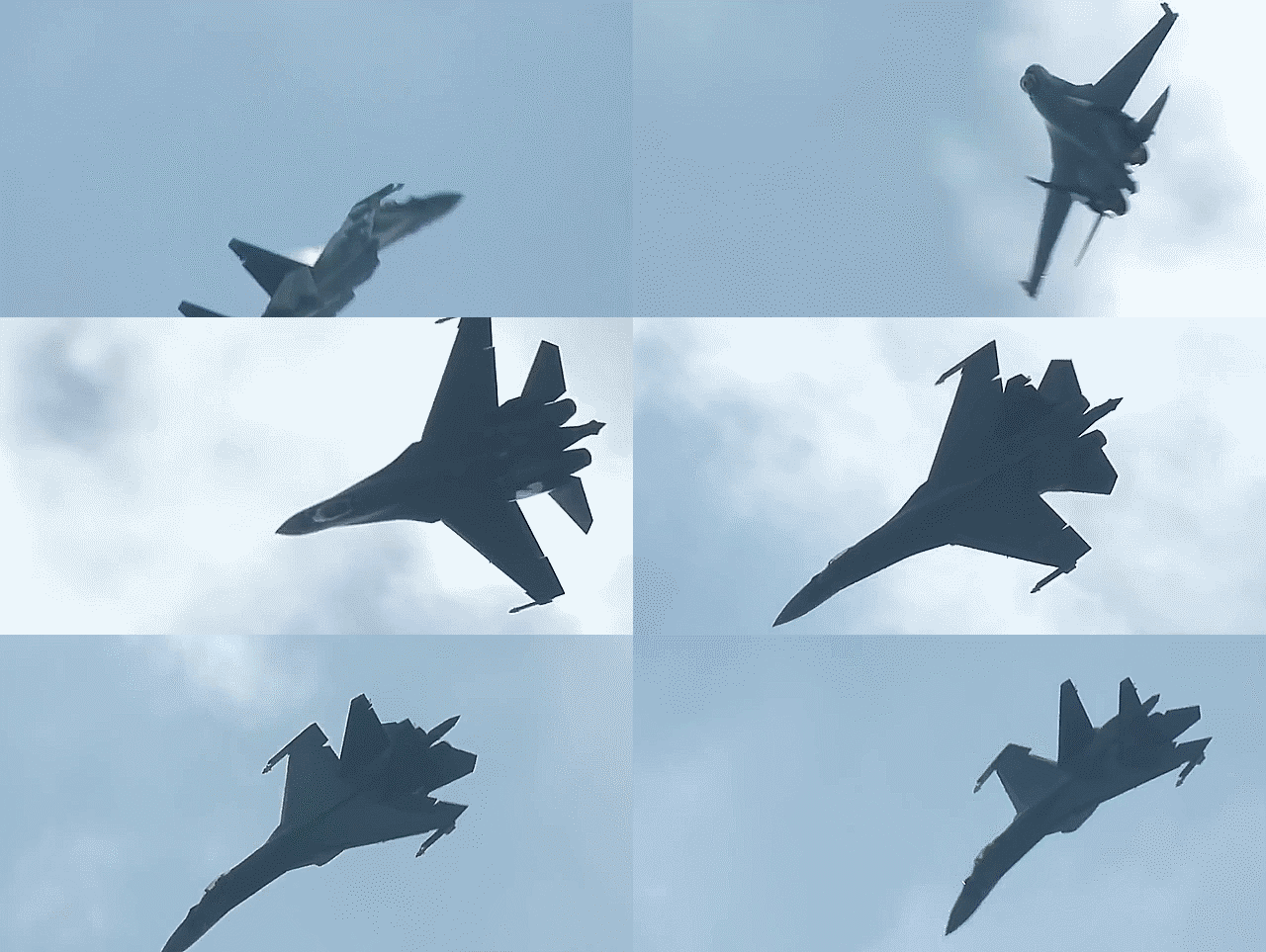
When you are in the combat zone, agility of a fighter jet is of utmost importance. But as an engineer, if you have already fiddled around with the wing structure your next option would be to fiddle around with the direction of the thrust.
Thrust Vectoring
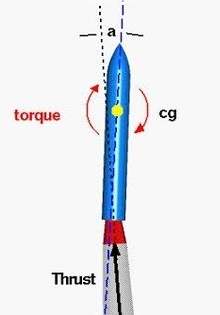
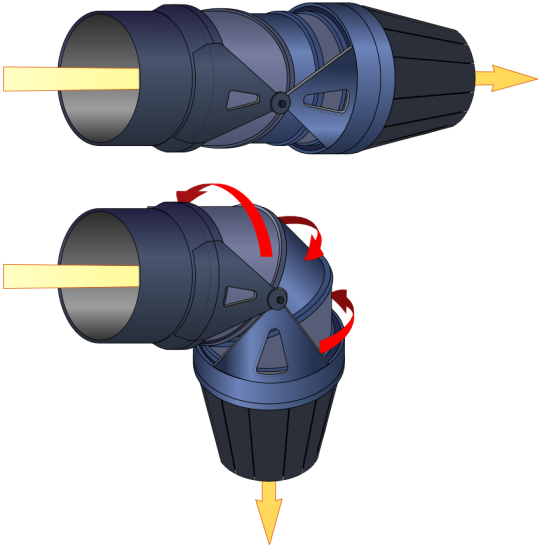
Thrust vectoring is primarily used for directional control in rockets and jets. And one achieves this by manipulating the direction of thrust .
This generates the necessary moments (and forces) that enable the directional control of the aircraft.
An aircraft traditionally has three “degrees of freedom” in aerodynamic
maneuverability; pitch, yaw and roll. **
The number of “dimensions” of
thrust vectoring relates directly to how many degrees of freedom can be
manipulated using only the vectored engine thrust.
Therefore, 2D
vectoring allows control over two degrees of freedom (typically pitch
plus either roll or yaw) while 3D controls all three.
Lockheed Martin F35B
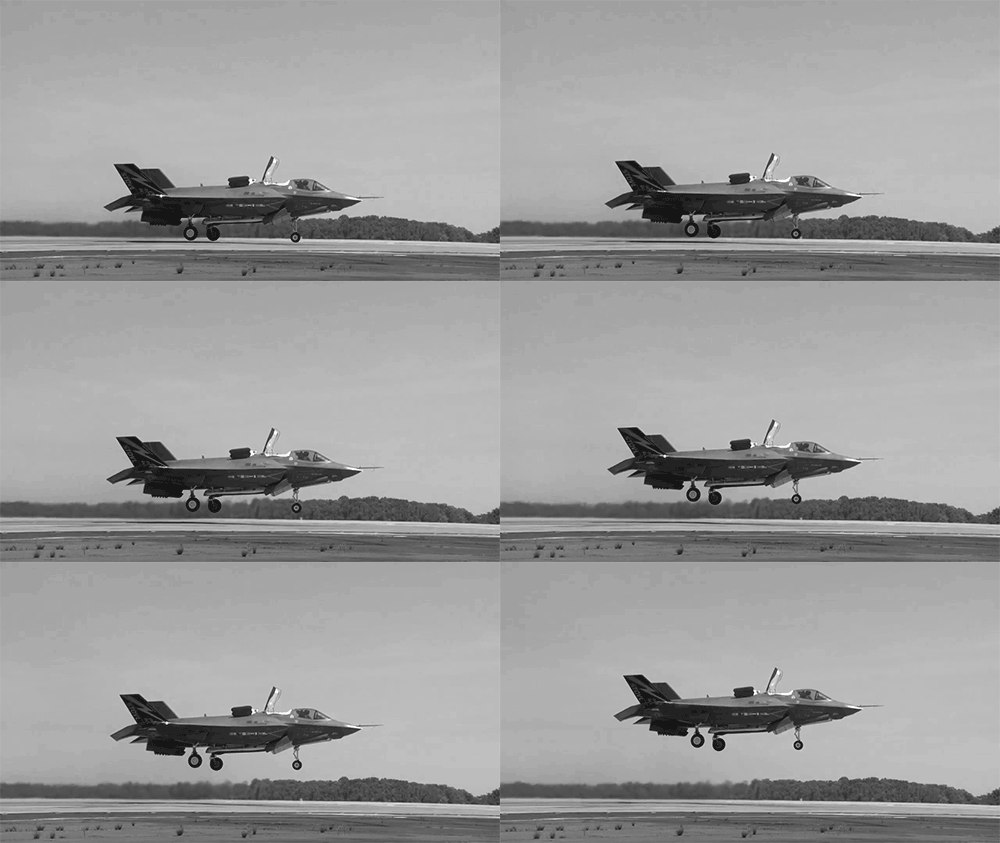
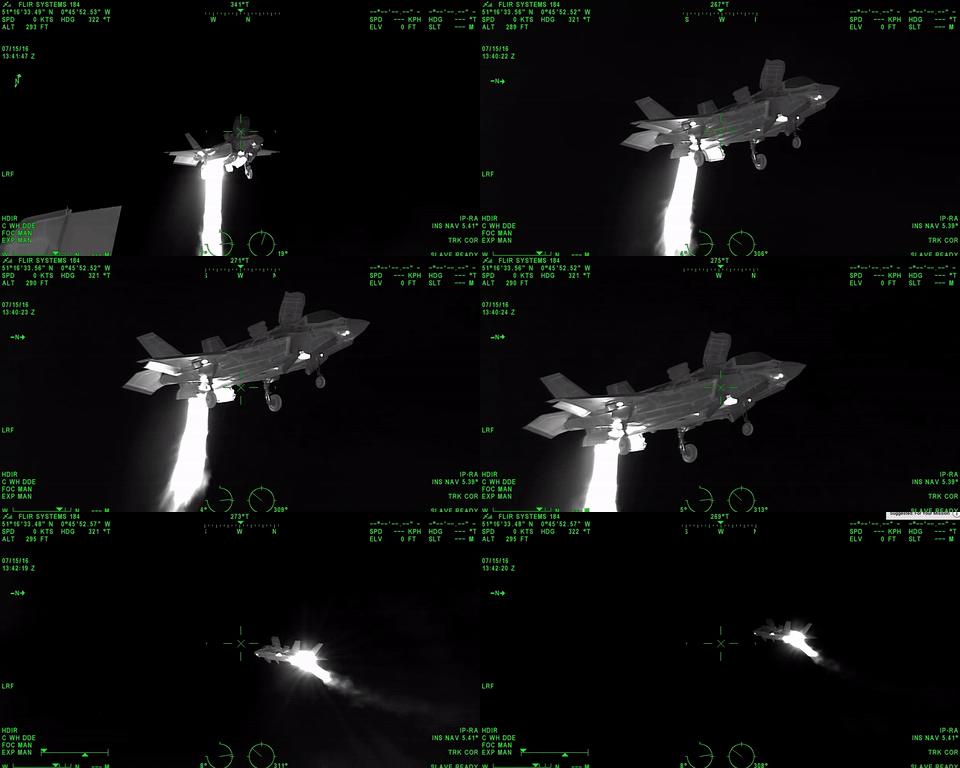
The F-35B short takeoff/vertical landing (STOVL) variant is the world’s first supersonic STOVL stealth aircraft.
It achieves STOVL by swiveling its engine 90 degrees and directing its thrust downward during take off/lvertical landing mode.
In the following gif you can witness the transition from a 90 degree tilted engine towards a forward thrust engine during flying.
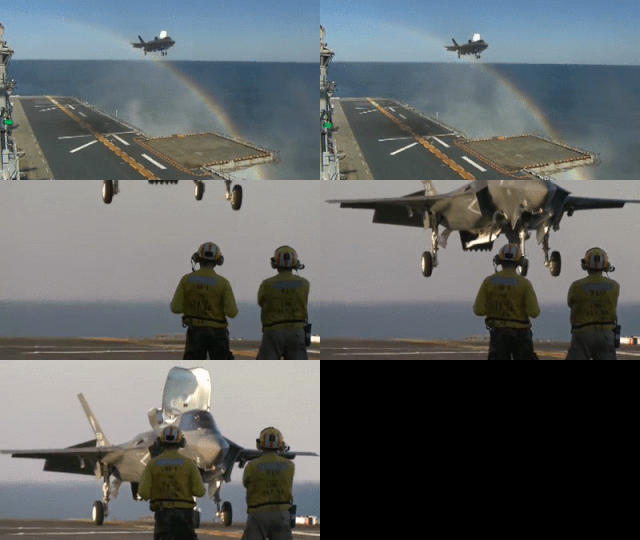
Unlike other variants of the Lockheed Martin F-35 the F-35B has no landing hook. And as a result, witnessing its landing is rather pretty special.
But nevertheless, this is one of those posts which addresses a topic that has been a the
gold mine for research. If this sort of thing fascinated you, there have been a lot of research conducted by NASA do check them out.


 GigiopixTumblr