If you want to know how get to Mars, ask the Mars Makers! That’s what we are doing, and there is a WHOLE lot of detail to come! With over 82 interviews conducted to date, at least 30 Vikings in queue to interview, and even more we have not yet reached (tell us who you are, please), we have learned A LOT. But we have still only scratched the surface.
So today, to celebrate the September 3, 1976 anniversary of Viking II landing on Mars, we will share a few images and notes from interviews with the FIRST Mars Makers, the men and women who designed and built the Viking Space Craft (among other roles they played that we will cover in a later post).
The first images from Viking II indicated a very rocky surface
Most people think or hear about missions when they launch or land and report data. But the fact is 90% of the mission happens YEARS (even 10-20 years) BEFORE launch! How is that for patience and perseverance! So what IS that 90%??? Its MAKERS doing what they do best!
BRAINSTORMING – DESIGNING – TESTING – BREAKING STUFF – REDESIGNING – TESTING SOME MORE
Seriously. These days kids are taught “failure is not a option”, a misapplied trickle down artifact from the earliest space days. However if you apply that to real life, not some ethereal sound bite that lingers in history, you have to acknowledge that in fact nothing works all the time, EVEN IF, occasionally and against the odds, it does seem to work right the first time. So the tests and failure analysis, that made Viking successful were a critical part of the design phase, and it was ONLY with rigor, research, and “intentionally” breaking things that the Viking was successful. If Viking had been simulated only in a CAD environment, real world scenarios would not have revealed weaknesses in the Viking aeroshell that could have been disastrous had they not been found during testing by dedicated PEIs and Test Technicians, a fate of many Mars missions before and after Viking.
The detailed tests and design process will be covered in the exhibits and digital museum we are building (with your support) as we keep you up to date with high level posts and blogs.
The fact is, Makers of today – Do It Yourselfers (DIYs), hobbyists, engineers, and hacks alike all have something in common with Vikings. They were making it up as they went, figuring out how to solve problems never solved, coming up with problems never even conceived of, and testing all kinds of incredible configurations time and time again, to get it right. But what does it mean to ‘get it right’? What is the purpose of the testing and what tests should we do?
First of all the Mars Makers had a few important considerations, not unlike today…
All of you DIYs and Engineers already know that when you are planning on making something, you generally start with an objective and problem to solve. Well, the Vikings began with objectives and problems too. In fact they had two main drivers, and the leadership to keep them focused:
Get there safely
Meet the Science objectives
It may sound simple, but when you learn more you will realize not just how complicated it was, but how the Viking designed systems, parts, models, and methods made all of the subsequent missions to Mars possible through innovative and rigorous designs, theoretical models, and plain hard work. Of course, as new technology has also been developed, designs and techniques have been modified. But Viking did it first.
These models were built by 5th Graders in 1979, inspired by the 3rd Viking Lander (VL3) during its stay at a Seattle area Elementary School
So, who are the Mars Makers and what did they do? They were the men and women who worked on Viking. That includes ALL the craft: the Titan IIIE, the Orbiters, and the Landers, and all the contributing companies and institutes.
By the way A LOT of people were involved in Viking. Thousands in fact. So many, that we will continue to add new interviews and information for years to come. It will take a while, but we will share it as we go, and we have time, as we are dedicated to including everyone. So be patient please as we focus most of our energy on locating and interviewing Vikings and rescuing archives and artifacts from their demise. That means transcribing, fact checking, cross referencing, and curating a lot of information, so if you aren’t included and you participated in Viking, get in touch with us at info@thevikingpreservationproject.org We will get back to you!
But to get started, and in honor of the Viking II landing on Mars, September 3, 1976, lets start with the Landers.
The Primary Contractor for the Viking Landers was Martin Marietta. There is a lot of history on the company, so we are going to stick to the stuff they and the subcontractors MADE rather than history, because this is about MARS MAKERS.
So lets break it down. Diagrams of the Lander show the very basic elements.
These diagrams show the science instruments, communications, engines, power systems, fuel tanks, and lots of other details, as well as how the internal systems were organized. But remember the first objective is to GET THERE SAFELY.
That requires a lot of different components, including many that are attached to the Lander during flight but eventually are ejected through a variety of pyro “techniques”. It also includes the Orbiters themselves and the Communications systems on the Orbiters and the Deep Space Networks earth bound tracking stations. All of these play a role in getting there safely. However, today we are focused on the high level of Lander Capsule and an often overlooked detail.
From a “top down” look, the physical elements of the Viking Lander Capsule include: the Bioshield Cap, the Base Cover, the Lander itself, the Aeroshell & Heat Shield, and the Bioshield Base. Within these elements there are specific systems associated with getting there safely (remember that’s Objective #1, as Jim Martin frequently had to remind the science team members who were focused on choosing the best sites to get the most interesting science results, often in conflict with the safest choices). These primary “landing" elements were: the Guidance and Control Subsystem, the Aeroshell & Heat Shield, the Parachutes, the Terminal Descent Engines, and the Legs and Footpads.
So lets start there. Think about how you would design a craft that is going to land on the surface of Mars. Well, Viking went through a number of configurations before the “As Built” design emerged after months and years of research and testing, but the first thing to “touch down” were to be the legs (they hoped). This made the legs and footpads a primary factor in a safe landing. Think egg drop in your 4th grade physics class – and remember that the instruments on board were not invincible AND we had no idea what the surface consistency would be. Was it inches of soft dust that the lander might sink into, or was it a hard and unforgiving surface? At that point we didn’t know.
This is where all Makers, Engineers, and Problem Solvers really dig in and excel!
The problem was ‘How do we design to land on a surface of unknown properties?‘
Hey, that must be one of the Problems we were talking about that went along with Objectives! Yes, it was. So what did the Mars Makers at Martin Marietta do!? They designed and tested for a RANGE of possibilities. Successfully. And this problem was first addressed in a paper on Engineering Surface Properties on Mars, principally authored by Jim Gliozzi, a key Mars Maker, Engineer AND Scientist who worked on Viking.
Before we examine the leg and footpad designs lets look at the descent requirements
During descent, the aeroshell provided initial braking during entry beginning at 800,000 feet to reduce the speed below MACH 1, in order to deploy the parachute at 19,000 feet, after which the aeroshell was jettisoned. The parachute then reduced the velocity until the terminal descent engines fired up to begin the terminal descent at 4,600 feet which reduced the speed further to an acceptable velocity to allow a soft landing on the legs and footpads. The magic of reducing the speed to acceptable ranges was achieved by throttling the terminal descent engines using the radar altimeter as the guide, which gave real time distance readings to the surface.
The paper, which will be available in the Digital Museum along with thousands of other papers, diagrams, and photos, describes 5 distinct mars models that considered the range of possibilities for the planets surface. Not only did Jim Gliozzi write the models, but like any dedicated problem solver, he was out in the deserts of White Sands doing the unforgiving work of testing the models. Imagine working in your backyard on a difficult large scale project in the heat and moving tons of dirt and rocks. That is what Jim Gliozzi did… and his work paid off! The research and testing by the scientists and engineers from the Space Physics Group in the Planetary Geology Lab at Martin Marietta, and other teams such as their Aerothermal Lab, they resolved a key element in Objective number 1, AND their work has informed next generations of Mars Makers.
So if you want to make stuff like the Viking Mars Makers, keep in touch with us as we post design documents and manuals, and lots of other behind the scenes archives to help you learn from the pros.
Well it is past 3:58pm PDT when Viking Lander II safely landed on Mars. Despite some challenges, and concern at the first image which indicated the Lander was somewhat pitched due to a footpad resting on a rock, the Landing was a success, and we had a new view of Mars from 47.96 deg N 225.77 deg W, and more history was made!
To close this posting, a poem written by a Viking about the landing.
Thanks for joining us to celebrate the Mars Makers and Viking II Landing on Mars!
Preserving Viking history, artifacts, data, science and memories for future generations.
For more information on The Viking Mars Mission Education and Preservation Project visit us at www.thevikingpreservationproject.org and follow our tweets @MarsVikingTeam as we post newly curated items!
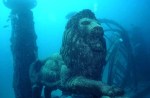
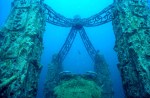
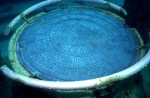
Qiandao Lake is a man-made lake located in Chun’an County, China, where archeologists have discovered in 2001 ruins of an underwater city. The city is at a depth of 26-40 meters and was named “Lion City”. There would have been 290,000 people living in this city during more than 1300 years.
The trees and hillsides surrounding the Russian town of Karabash are burned and lifeless. The river is dead, its water orange and slimy, and the lake has the reddish hue of too much copper and iron. Most ominous of all, a mountain of black slag more than a mile long splits the town, filling the air with suffocating dust when the wind blows.
Pierpaolo Mittica has spent four years photographing some of the planet’s most polluted locales, and even he was surprised by what he found in this town about 100 miles north of Kazakhstan. “I’ve never in my life seen a place like Karabash, where the pollution is so evident and visible all around you,” he says. “It looks like a post-apocalyptic movie.”




































 GigiopixTumblr