Quindi uno dovrebbe tenere le olive surgelate, e spremerle con questo coso nel momento in cui serve l’olio?
A parte i dubbi sull’effetto del surgelamento nelle olive, ma se anche non intaccasse le loro proprietá, quanto costa congelare, stoccare e trasportare tutte quelle olive?
Se si considera che per la spremitura a freddo in frantoio la resa per quintale si aggira intorno al 12-14% (ovviamente dipende dalla qualitá delle olive e dalle annate), per fare 12-14 litri d’olio servono un quintale di olive. Ovvero circa 6-7 cassette piene. Ci si riempie facilmente un congelatore a pozzo da casa.
Supponiamo sia un congelatore di classe A, come quelli piu’ diffusi. Stimiamo un consumo medio di circa 300 KWh annui e un costo medio di circa 15 centesimi al KWh: viene circa 45 euro all’anno.
Per 12 litri d’olio. Per CONSERVARE 12 litri d’olio.
A ció, se uno non ha un uliveto, vanno aggiunte le spese di trasporto per un quintale di olive surgelate (e i costi della relativa catena del freddo), lo spazio occupato in casa da un congelatore a pozzo, e il costo iniziale del mini frantoio robot. Se uno ha un uliveto, le spese di trasporto saranno ridotte, ma va considerato l’acquisto della macchina per il sottovuoto, per surgelare (e non congelare) le olive.
Inoltre se il robot funziona come un normale frantoio, avrá anche dei costi di manutenzione: i diaframmi (fiscoli) della pressa probabilmente andranno cambiati col tempo.
Uno potrebbe obiettare che chi compra questo coso, vive in cittá e non tiene un congelatore pieno di olive: ne compra volta per volta il minimo necessario. Ma i costi di gestione e stoccaggio rimangono: si ripercuoteranno semplicemente sul prezzo dei pacchetti di olive surgelate.
Non so, mi sembra un modo molto inefficiente e abbastanza hipster di fare l’olio. Ritengo molto piú pratico il frantoio, e lo stoccaggio in tini d’acciaio inox, come si é sempre fatto.
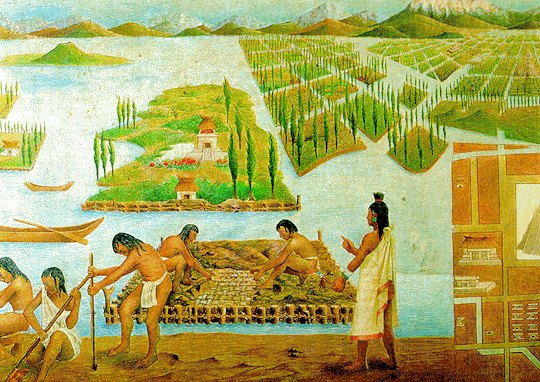
How on earth would you feed a city of over 200,000 people when the land around you was a swampy lake? Seems like an impossible task, but the Aztec managed it by creating floating gardens known as chinampas, then they farmed them intensively.
These ingenious creations were built up from the lake bed by piling layers of mud, decaying vegetation and reeds. This was a great way of recycling waste from the capital city Tenochtitlan. Each garden was framed and held together by wooden poles bound by reeds and then anchored to the lake floor with finely pruned willow trees. The Aztecs also dredged mud from the base of the canals which both kept the waterways clear and rejuvenate the nutrient levels in the gardens.
A variety of crops were grown, most commonly maize or corn, beans, chillies, squash, tomatoes, edible greens such as quelite and amaranth. Colourful flowers were also grown, essential produce for religious festivals and ceremonies. Each plot was systematically planned, the effective use of seedbeds allowed continuous planting and harvesting of crops.
Between each garden was a canal which enabled canoe transport. Fish and birds populated the water and were an additional source of food. [x]
This is literally so cool. Not only does it contribute to spacial efficiency, but the canals would easily keep pests, weeds, and possibly even diseases out of the respective plots. Companion planting and bio-intensive planting would be so much easier. Water-wise systems would be inherently present. Plus it looks so super neat aesthetically. I am just all about this.
tra le svariate cose che gli europei hanno distrutto





 GigiopixTumblr