Stavolta questa è una bella notizia, che bella, davvero, bella.
Claudio, che peccato mortacci tua finalmente.
Grande.
è la maledizione contro di emmanuelnegro che diceva che il film non arrivava dove sta lui nemmanco se candidato agli oscar. daje, gufa come un apotropaico figuro, puxa vida. anche se so na sega chi sei. daje!
Nasa scientists find evidence of flowing water on Mars | See full article
“There is liquid water today on the surface of Mars,” Michael Meyer, the lead scientist on Nasa’s Mars exploration programme, told the Guardian. “Because of this, we suspect that it is at least possible to have a habitable environment today.”
For more on the groundbreaking discovery, visit the Guardian, where you can view more pictures in our photo gallery and explore our interactive.
CIAONE RAGA
“The flows could be used to find water sources on Mars, making them prime
spots to hunt for life, and to land future human missions.“
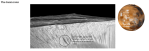
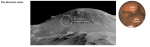
Darkened streaks that ebb and flow with time have been observed by NASA’s Mars Reconnaissance Orbiter. Scientists believe this changing coloration, which appears to flow down slopes during warm seasons and disappears during cooler seasons, is evidence of hydrated minerals. They believe the liquid is a salty brine water.
“Our quest on Mars has been to ‘follow the water,’ in our search for life in the universe, and now we have convincing science that validates what we’ve long suspected,” said John Grunsfeld, astronaut and associate administrator of NASA’s Science Mission Directorate. “This is a significant development, as it appears to confirm that water – albeit briny – is flowing today on the surface of Mars.” Read the photo caption below. Learn more here.
The discovery was first observed in 2010 by Lujendra Ojha, a Georgia Tech undergraduate student who saw the darkened streaks while looking at images acquired by MRO.
(This animation simulates a fly-around look at one of the places on Mars where dark streaks advance down slopes during warm seasons, possibly involving liquid water. This site is within Hale Crater. The streaks are roughly the length of a football field. Courtesy of NASA.)












 GigiopixTumblr