Probabilmente è per quello che accendono i lampioni, così non ci si pensa.
Beh… sul cocuzzolo della mia sperduta collina ho tutto il tempo e il modo di sentirmi risucchiato via.
(Da qualche parte ho letto che durante un blackout in una metropoli statunitense il 911 ricevette centinaia di telefonate di gente in panico perché c’era una strana striscia enorme in cielo… LA TRISTEZZA CHE MI VIENE NEL CUORE)
Io odiavo le luci del vicino di casa che avevo prima. Teneva ogni notte tutto acceso fuori. Gia’ c’erano i lampioni lungo la strada, ma con quei faretti sul piazzale poi… Neanche Duccio sul set de Gli occhi del cuore. Non si vedeva nulla.
Dove abito adesso invece, buio totale. Si vedono talmente bene le stelle che hanno costruito un piccolo osservatorio astronomico, qua vicino.
“Mi domando”, disse,
“se le stelle sono illuminate perche’ ognuno possa un giorno trovare la
sua.“
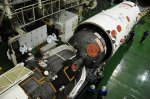
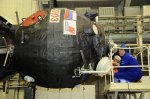
Russia’s latest version of its venerable Soyuz spacecraft – the MS series – is set for its inaugural flight July 6. Soyuz MS-01 will transport the Expedition 4/49 crew to the International Space Station.
The new MS series incorporates improved communications and navigation equipment, allowing Soyuz to remain in contact with ground stations up to 70% of its orbit – twice longer than its previous versions.
Launch is scheduled for 9:36pm EDT July 6 from the Baikonur Cosmodrome.
Giorno 6. Lokomasama First Aid Point Emergency (Sierra Leone).
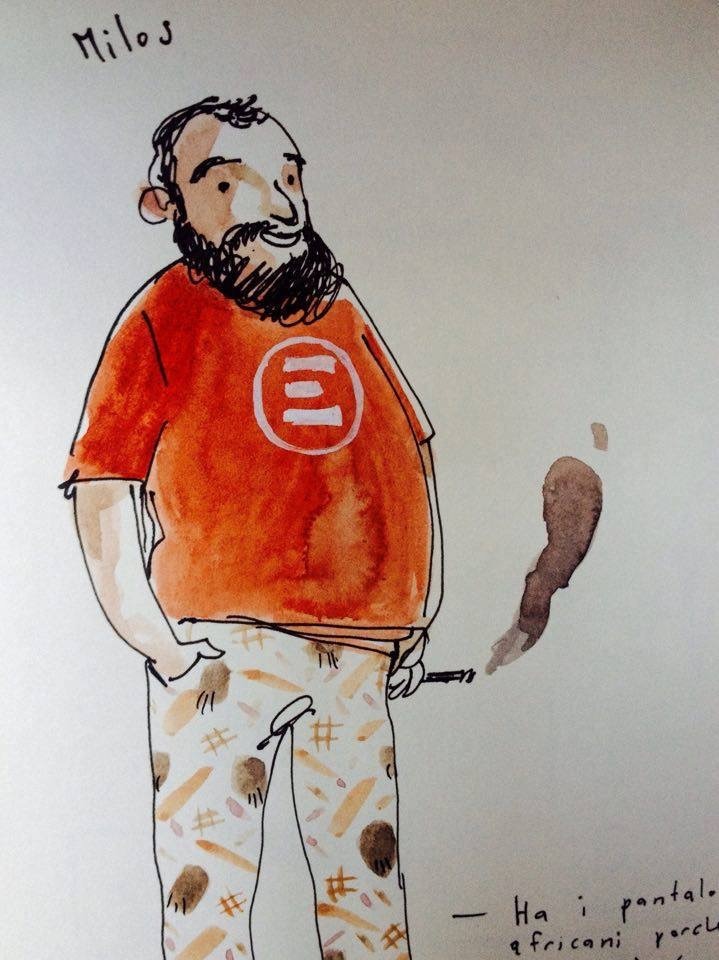
“Ne uccide più la strada dell’ebola” ci spiega Milos (l’infermiere serbo con i modi da fratello maschio che chi non ha un fratello maschio sogna), solo che l’ebola è finita, le strade no. Sono arrivate le imprese cinesi, hanno asfaltato e costruito, collegato Freetown al resto del paese, ma sembra che il risultato sia solo che la gente muoia più velocemente. C’ho messo un paio di giorni a capire come funziona la guida: nonostante siano stati una colonia inglese, tengono la destra ma sempre a destra superano. Vanno velocissimi, soprattutto in moto, con protezioni improbabili, dal caschetto da cantiere al casco da rugby al cappellino da baseball. “Si rompono tutto, sono forti, muscolosi, ma mangiano poco, poche proteine e le ossa si spezzano facilmente”. In ospedale passano 20.000 incidentati ogni anno, sono le vittime di una modernità con il piede sull’acceleratore alla quale la gente non sembra preparata. Il 50% della popolazione ha meno di quindici anni e i figli imparano prestissimo a occuparsi degli altri fratelli e soprattutto dei genitori. La sensazione è di un paese ingenuo anche se antico, un paese stanco e bambino. È un mondo al contrario che non riesce a diventare adulto perché fa fatica anche solo a sopravvivere, con grandi muscoli e ossa fragili proprio come i suoi abitanti.
You might wonder how a laboratory 250 miles above Earth could help us study and observe our home planet, but the space station actually gives us a unique view of the blue marble we call home.
The space station is part of a fleet of Earth remote-sensing platforms to develop a scientific understanding of Earth’s systems and its response to natural or human-induced changes and to improve prediction of climate, weather and natural hazards. Unlike automated remote-sensing platforms, the space station has a human crew, a low-orbit altitude and orbital parameters that provide variable views and lighting. Crew members have the ability to collect unscheduled data of an unfolding event, like severe weather, using handheld digital cameras.
The Cupola, seen above, is one of the many ways astronauts aboard the space station are able to observe the Earth. This panoramic control tower allows crew members to view and guide operations outside the station, like the station’s robotic arm.
The space station also has an inclined, sun-asynchronous orbit, which means that it travels over 90% of the inhabited surface of the Earth, and allows for the station to pass over ground locations at different times of the day and night. This perspective is different and complimentary to other orbiting satellites.
The space station is also home to a few Earth-observing instruments, including:
The ISS-RapidScat monitors ocean winds for climate research, weather prediction and hurricane science. This vantage point gives scientists the first near-global direct observations of how ocean winds can vary over the course of the day, while adding extra eyes in the tropics and mid-latitudes to track the formation and movement of tropical cyclones.
CATS (Cloud-Aerosol Transport System) is a laser instrument that measures clouds and airborne particles such as pollution, mineral dust and smoke. Improving cloud data allows scientists to create more accurate climate models, which in turn, will improve air quality forecasts and health risk alerts.
Want to observe the Earth from a similar vantage point? You can thanks to our High Definition Earth-Viewing System (HDEV). This experiment is mounted on the exterior of the space station and includes several commercial HD video cameras aimed at the Earth.
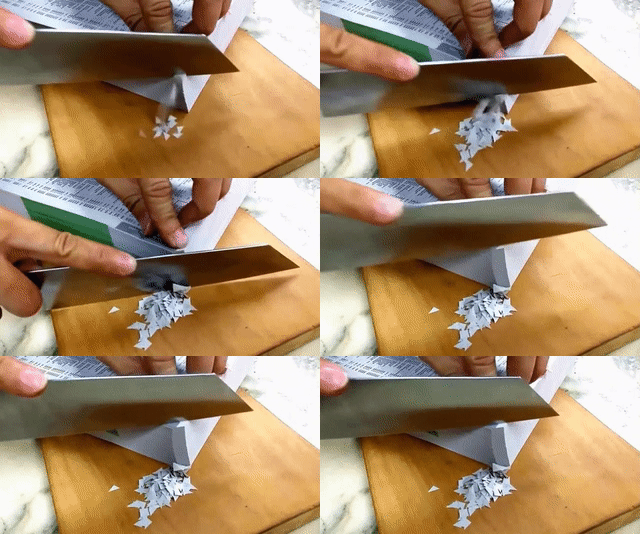
This very sharp knife is so satisfying to watch. (Source)
Uno dei modi per valutare l’affilatura di una lama, é proprio quello di tagliare un foglio di carta con la lama perpendicolare allo spessore, tenendolo in tensione e facendo un solo movimento continuo. E poi valutare la qualita’ del taglio dai microstrappi residui sui due lembi di carta. Se e’ ben affilato, non ci dovrebbero quasi essere.
Ce l’ho ancora. L’ho trovata tanti anni fa in una casa abbandonata. Il proprietario era morto in un qualche incidente stradale parecchi anni prima, e la casa era rimasta chiusa per decine d’anni. Quando gli eredi hanno deciso di svuotarla per ristrutturarla, sembrava una capsula del tempo. Poltrone a uovo anni 70, salotto in stile Mad Men, tappeti con colori forti e forme astratte, pareti bicolori anche nei corridoi, sedie colorate con le zampe d’acciaio, e questa lampada, che stavano buttando perché “ma che te ne fai? e’ brutta come il peccato”.





 GigiopixTumblr