10 Images to Celebrate the Historic Exploration of the Pluto System
One year ago, our New Horizons mission made history by exploring Pluto and its moons – giving humankind our first close-up look at this fascinating world on the frontier of our solar system.
Since those amazing days in July 2015, the New Horizons spacecraft has transmitted numerous images and many other kinds of data home for scientists and the public alike to study, analyze, and just plain love. From Pluto’s iconic “heart” and sweeping ice-mountain vistas to its flowing glaciers and dramatic blue skies, it’s hard to pick just one favorite picture. So the mission team has picked 10 – and in no special order, placed them here.
Click the titles for more information about each image. You’ve seen nine of them before, and the team added a 10th favorite, also sure to become one of New Horizons’ “greatest hits.”
In the northern region of Pluto’s Sputnik Planum, swirl-shaped patterns of light and dark suggest that a surface layer of exotic ices has flowed around obstacles and into depressions, much like glaciers on Earth.
This dramatic image from our New Horizons spacecraft shows the dark, rugged highlands known as Krun Macula (lower right), which border a section of Pluto’s icy plains.
Pluto’s haze layer shows its blue color in this picture taken by the New Horizons Ralph/Multispectral Visible Imaging Camera (MVIC). The high-altitude haze is thought to be similar in nature to that seen at Saturn’s moon Titan.
At half the diameter of Pluto, Charon is the largest satellite relative to its planet in the solar system. Many New Horizons scientists expected Charon to be a monotonous, crater-battered world; instead, they’re finding a landscape covered with mountains, canyons, landslides, surface-color variations and more.
Our New Horizons spacecraft looked back toward the sun and captured this near-sunset view of the rugged, icy mountains and flat ice plains extending to Pluto’s horizon. The backlighting highlights over a dozen layers of haze in Pluto’s tenuous but distended atmosphere.
The color and brightness of both Pluto and Charon have been processed identically to allow direct comparison of their surface properties, and to highlight the similarity between Charon’s polar red terrain and Pluto’s equatorial red terrain. Pluto and Charon are shown with approximately correct relative sizes, but their true separation is not to scale.
A moment’s study reveals surface features that appear to be texturally ‘snakeskin’-like, owing to their north-south oriented scaly raised relief. A digital elevation model created by the New Horizons’ geology shows that these bladed structures have typical relief of about 550 yards (500 meters). Their relative spacing of about 3-5 kilometers makes them some of the steepest features seen on Pluto.
This view is dominated by the large, bright feature informally named the “heart,” which measures approximately 1,000 miles (1,600 kilometers) across. The heart borders darker equatorial terrains, and the mottled terrain to its east (right) are complex. However, even at this resolution, much of the heart’s interior appears remarkably featureless—possibly a sign of ongoing geologic processes.
One of Pluto’s most identifiable features, Cthulhu (pronounced kuh-THU-lu) stretches nearly halfway around Pluto’s equator, starting from the west of the great nitrogen ice plains known as Sputnik Planum. Measuring approximately 1,850 miles (3,000 kilometers) long and 450 miles (750 kilometers) wide, Cthulhu is a bit larger than the state of Alaska.
Colorful Composition Maps of Pluto
The powerful instruments on New Horizons not only gave scientists insight on what Pluto looked like, their data also confirmed (or, in many cases, dispelled) their ideas of what Pluto was made of. These compositional maps – assembled using data from the Linear Etalon Imaging Spectral Array (LEISA) component of the Ralph instrument – indicate the regions rich in ices of methane (CH4), nitrogen (N2) and carbon monoxide (CO), and, of course, water ice (H2O).
a millennial: i work three jobs and still don’t make enough to live comfortably or save for my future
a baby boomer: well then why don’t you have four jobs?
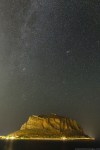
Alexandros Maragos is an Athens based filmmaker and photographer best known for his landscape photography, astrophotography and timelapse imagery. In his own words:
The Milky Way is the name of the spiral galaxy in which our solar system is located. It is our home in space. The Earth orbits the Sun in the Solar System, and the Solar System is embedded within this vast galaxy of stars. In the northern hemisphere, the Milky Way is visible in the southern half of the sky. This makes Greece one of the best places in the world to see and photograph the galaxy because of the country’s geographic location in Southern Europe at the crossroads of Europe, Asia, and Africa.
As a filmmaker and photographer I feel very fortunate to live here. Every time I want to shoot the night sky, all I do is to pick a new spot on the map and just go there and take the shot. Greece is a heaven for astrophotography. Whether you choose a mountain, a beach, a peninsula or any of the 6,000 islands, the Milky Way is always visible in the southern sky.
A parte la 2 e la 9 (che dovrei seguire piu’ spesso, ma a volte non si puo’ smontare mezzo codice solo per una questione di stile), le ho sempre seguite tutte. Ora mando il cv alla NASA 😀
Vabbé, però la 2 e la 3 vanno benissimo se devi scrivere il controllo di un razzo (o di una lavatrice, il concetto è lo stesso) ma per il software applicativo sono il maleh.
E per la 9: ma allora perché cazzo scrivere in C? 🙂
Infatti io scrivo piu che altro software per ambienti realtime 🙂
La 9 e’ semplice buon senso. Non il fatto di non usare puntatori, ovviamente, ma di non usarli in modo complesso. Ci possono essere funzioni che prendono puntatori a puntatore, oppure anche qualche puntatore a funzione occasionalmente (specie quando devi scrivere codice estensibile in futuro con funzioni che ancora non conosci), ma senza esagerare, diciamo. Puntatori usati in modo complesso aumentano la probabilita’ di fare casino, e i tempi di debug.
La piu’ importante comunque, penso sia la 3. Le malloc, se posso, cerco di evitarle sempre. Uso quasi sempre allocazione statica, con strutture a dimensione
prefissata (con la dimensione in una define o una variabile const, per
espandere le strutture quando serve senza toccare il codice). Il che ti
rende semplice anche a usare for a
dimensione fissa, invece di while (che era la cosa del punto 2, pero’
qualcuno scappa sempre, se non cerchi esplicitamente di evitarlo).
In
ambito realtime la malloc puo’ causare problemi, specialmente quando
hai piu’ processi a priorita’ diverse con piu’ thread, e rendere la
ciclicita’ dei processi realtime impredicibile.
Esempio:
il thread A a bassa priorita’ inizia una malloc (ed entra nella sezione
critica). Poi, prima che la malloc sia finita, arriva un cambio di
contesto che switcha su un thread B ad alta priorita’. B cerca anche lui
di fare una malloc, ma NON PUO’ entrare nella sezione critica perche’
c’e’ la malloc di A ancora in corso. Per cui B SI BLOCCA, eleva A alla
sua stessa priorita’, e aspetta che finisca la propria malloc. Poi abbassa di nuovo
la priorita’ di A (e qua dipende dallo scheduler e dal kernel che
stiamo usando, alcuni non la abbassano nemmeno).
Ci
sono situazioni in cui i thread realtime NON POSSONO bloccarsi.
Immagina ad esempio un thread che calcola continuamente la posizione da
inviare a un motore con un clock di 1 millisecondo. Se si blocca, per un
ciclo la posizione non viene ricalcolata, e al motore rimane la stessa del ciclo
precedente. Il che significa che deve restare fermo. Se ipotizziamo che il motore sta girando a 500 metri
al secondo, significa una decelerazione da 500m/s a 0 in 1 ms, quasi
istantanea. Una botta mostruosa in grado di spaccare la macchina.
Tutto per una malloc 🙂
Situazioni analoghe si verificano anche in altri ambiti realtime: la diagnostica di un treno, il sistema di guida di di una sonda spaziale, il driver di una stampante, ecc, il tracker di un telescopio, il meccanismo di coordinamento dei motori di una nave, ecc…
Oltre
a cio’, le malloc sono lente, ti costringono a ricordarti sempre le
free, a stare attenti alla dimensione allocata, a usare poi tool per la
ricerca di memory leak, ecc. E’ facile fare casino, e difficile da vedere in debug poi.
Con
questo non dico che non si puo’ MAI usare eh. Dipende dalle situazioni,
vanno usate con cognizione di causa. Pero’ in genere, se posso evito.
A parte la 2 e la 9 (che dovrei seguire piu’ spesso, ma a volte non si puo’ smontare mezzo codice solo per una questione di stile), le ho sempre seguite tutte. Ora mando il cv alla NASA 😀




















 GigiopixTumblr