Tra il 1980 e il 2012 una
media di poco più di 12 donne al giorno si è recata nel Regno Unito per
abortire, visto che l’aborto in Irlanda è illegale in tutte le
circostanze con l’eccezione del rischio reale per la vita della donna.
L’aborto
in Irlanda è illegale, tranne nei casi in cui esista un rischio “reale e
sostanziale” per la vita (non per la salute) della donna.
Questa eccezione è stata stabilita nel 1992 da una sentenza della Corte
suprema sul caso di una 14enne che era rimasta incinta a causa di uno
stupro e che aveva manifestato l’intenzione di suicidarsi. La
definizione del rischio “reale e sostanziale”, priva di chiarezza, ha
lasciato molte donne in un limbo.
Nell’ottobre 2012, Savita
Halappanavar è stata ricoverata a seguito di una minaccia di aborto
spontaneo. Ha chiesto un aborto indotto, ma le è stato negato, anche se
era chiaro che il feto non sarebbe sopravvissuto. È subentrata la
setticemia e Savita è morta alcuni giorni dopo. La sua tragica fine ha
messo in evidenza l’urgente necessità di una chiara definizione
giuridica del rischio. Nel 2013, il governo ha presentato una legge
sulla protezione della vita durante la gravidanza che dispone come
stabilire se esiste un rischio reale e sostanziale per la vita della
donna (distinto dal rischio per la salute), in presenza del quale un
aborto sarebbe lecito.
L’aborto resta illegale per le donne che
rimangono incinte a causa di uno stupro o di incesto, nei casi in cui è a
rischio la loro salute o in caso di anomalie fetali mortali. Le donne
che ricorrono a un aborto illegale rischiano fino a 14 anni di carcere.
Israele Gaza: colpito un orfanotrofio palestinese, uccise tre bambine disabili. Sempre più probabile l’invasione di terra
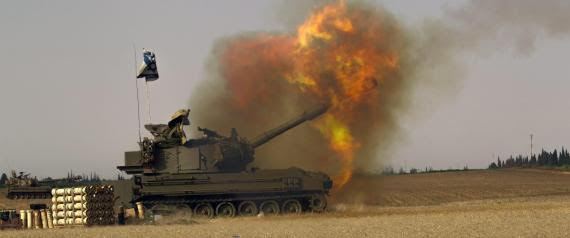
Dalle 21 locali Hamas ha iniziato un nutrito lancio di razzi, almeno sei, verso Tel Aviv, Ashqelon, Beit Shemesh e su altre località nel centro di Israele. Alcuni razzi indirizzati su Tel Aviv sono stati intercettati dalle batterie di difesa Iron Dome. Israele si accinge ad ordinare
stanotte alla popolazione di diversi rioni di Gaza di abbandonare le loro case perchè domani quelle aree si trasformeranno in zona di combattimento, ha anticipato la emittente Canale 10. In rappresaglia alla nuova sfida, apparentemente suicida di Hamas, fonti dello Stato Maggiore israeliano hanno annunciato “nelle prossime ore” nuovi significativi attacchi contro la Stiscia di Gaza.
… a Beit Lahya (a nord di Gaza) dopo che l’aviazione israeliana ha centrato un orfanotrofio, provocando la morte di tre piccole disabili…. Quanto al bilancio delle vittime, sono 22 i palestinesi rimasti uccisi oggi nei raid israeliani nella Striscia di Gaza, facendo così salire a 127 il numero complessivo morti nell’operazione “Barriera protettiva” lanciata martedì scorso da Israele per fermare il lancio di razzi. Almeno altre 940 persone sono rimaste ferite, stando a quanto precisato dal portavoce per i servizi sanitari sanitari di Gaza, Ashraf al-Qudra.
Tanti anni fa dicevamo “Fuori l’Italia dalla guerra, fuori la guerra dall’Italia”. Per anni abbiamo guardato guerra, violenza e terrore seminare morti e feriti “là”, in qualche Paese che non abbiamo mai visitato (i nostri soldati e le nostre armi, invece, spesso ci sono stati); le vittime avevano la pelle un po’ più scura della nostra, e tendenzialmente diventavano solo un trafiletto sui giornali: “800 morti a Baghdad”, e si girava pagina.
Oggi ci svegliamo e ci accorgiamo che Baghdad è qui, in riviera. Che le vittime sono uguali uguali a noi, anzi, siamo noi.
Che puoi uscire per andare a fare una passeggiata e non tornare più a casa, come succede ogni giorno “là”, a Kabul o a Ramadi.
Cittadini disarmati da una parte, dall’Iraq alla Francia, e dall’altra parte chi ha scelto e sceglie la guerra (con il turbante nero, in divisa o in giacca e cravatta). Loro fanno la guerra e noi paghiamo il conto. Anche oggi, a Nizza. Anche oggi, a Kabul.
Spezzare il cerchio della guerra, spazzar via la guerra dalla Storia non è più uno slogan da pacifisti, un bel sogno o un’utopia. E’ l’unica possibilità che ci rimane. O la guerra spazzerà via noi.
Cecilia Strada
Io c’ero, a Roma, quel giorno del 2003, insieme ad altri 3 milioni di persone con la bandiera della pace.
Non servi’ a niente, ma c’ero. Mi ricordo.
Quanto tempo è passato da quel giorno d’autunno di un ottobre avanzato, con il cielo già bruno, fra sessioni di esami,
giorni persi in pigrizia, giovanili ciarpami, arrivò la notizia…
È un fatto importante, ancorché comunemente noto, che le apparenze molto spesso ingannano. Per esempio, sul pianeta Terra gli uomini hanno sempre ritenuto di essere più intelligenti dei delfini. Sostenevano infatti che mentre loro avevano inventato un sacco di cose, come la ruota, New York, le guerre eccetera, i delfini non avevano fatto altro che sguazzare nell’acqua divertendosi. Esattamente per le stesse ragioni i delfini pensavano invece di essere di gran lunga più intelligenti degli uomini.
Douglas Adams, Guida galattica per autostoppisti (via deragliamente)
Britt M. is a photographer based in Oslo, with a special love for abandonment and moody skies. Her most beloved subject of photography are themed portraits. With a background in film and drama studies she loves to incorporate some kind of storytelling or posed tableau feeling in her portraits.
10 Images to Celebrate the Historic Exploration of the Pluto System
One year ago, our New Horizons mission made history by exploring Pluto and its moons – giving humankind our first close-up look at this fascinating world on the frontier of our solar system.
Since those amazing days in July 2015, the New Horizons spacecraft has transmitted numerous images and many other kinds of data home for scientists and the public alike to study, analyze, and just plain love. From Pluto’s iconic “heart” and sweeping ice-mountain vistas to its flowing glaciers and dramatic blue skies, it’s hard to pick just one favorite picture. So the mission team has picked 10 – and in no special order, placed them here.
Click the titles for more information about each image. You’ve seen nine of them before, and the team added a 10th favorite, also sure to become one of New Horizons’ “greatest hits.”
In the northern region of Pluto’s Sputnik Planum, swirl-shaped patterns of light and dark suggest that a surface layer of exotic ices has flowed around obstacles and into depressions, much like glaciers on Earth.
This dramatic image from our New Horizons spacecraft shows the dark, rugged highlands known as Krun Macula (lower right), which border a section of Pluto’s icy plains.
Pluto’s haze layer shows its blue color in this picture taken by the New Horizons Ralph/Multispectral Visible Imaging Camera (MVIC). The high-altitude haze is thought to be similar in nature to that seen at Saturn’s moon Titan.
At half the diameter of Pluto, Charon is the largest satellite relative to its planet in the solar system. Many New Horizons scientists expected Charon to be a monotonous, crater-battered world; instead, they’re finding a landscape covered with mountains, canyons, landslides, surface-color variations and more.
Our New Horizons spacecraft looked back toward the sun and captured this near-sunset view of the rugged, icy mountains and flat ice plains extending to Pluto’s horizon. The backlighting highlights over a dozen layers of haze in Pluto’s tenuous but distended atmosphere.
The color and brightness of both Pluto and Charon have been processed identically to allow direct comparison of their surface properties, and to highlight the similarity between Charon’s polar red terrain and Pluto’s equatorial red terrain. Pluto and Charon are shown with approximately correct relative sizes, but their true separation is not to scale.
A moment’s study reveals surface features that appear to be texturally ‘snakeskin’-like, owing to their north-south oriented scaly raised relief. A digital elevation model created by the New Horizons’ geology shows that these bladed structures have typical relief of about 550 yards (500 meters). Their relative spacing of about 3-5 kilometers makes them some of the steepest features seen on Pluto.
This view is dominated by the large, bright feature informally named the “heart,” which measures approximately 1,000 miles (1,600 kilometers) across. The heart borders darker equatorial terrains, and the mottled terrain to its east (right) are complex. However, even at this resolution, much of the heart’s interior appears remarkably featureless—possibly a sign of ongoing geologic processes.
One of Pluto’s most identifiable features, Cthulhu (pronounced kuh-THU-lu) stretches nearly halfway around Pluto’s equator, starting from the west of the great nitrogen ice plains known as Sputnik Planum. Measuring approximately 1,850 miles (3,000 kilometers) long and 450 miles (750 kilometers) wide, Cthulhu is a bit larger than the state of Alaska.
Colorful Composition Maps of Pluto
The powerful instruments on New Horizons not only gave scientists insight on what Pluto looked like, their data also confirmed (or, in many cases, dispelled) their ideas of what Pluto was made of. These compositional maps – assembled using data from the Linear Etalon Imaging Spectral Array (LEISA) component of the Ralph instrument – indicate the regions rich in ices of methane (CH4), nitrogen (N2) and carbon monoxide (CO), and, of course, water ice (H2O).
a millennial: i work three jobs and still don’t make enough to live comfortably or save for my future
a baby boomer: well then why don’t you have four jobs?
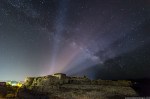
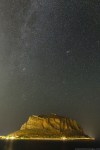
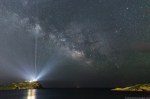
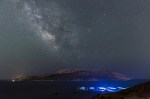
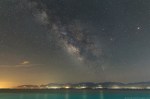
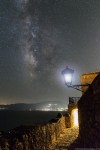
Alexandros Maragos is an Athens based filmmaker and photographer best known for his landscape photography, astrophotography and timelapse imagery. In his own words:
The Milky Way is the name of the spiral galaxy in which our solar system is located. It is our home in space. The Earth orbits the Sun in the Solar System, and the Solar System is embedded within this vast galaxy of stars. In the northern hemisphere, the Milky Way is visible in the southern half of the sky. This makes Greece one of the best places in the world to see and photograph the galaxy because of the country’s geographic location in Southern Europe at the crossroads of Europe, Asia, and Africa.
As a filmmaker and photographer I feel very fortunate to live here. Every time I want to shoot the night sky, all I do is to pick a new spot on the map and just go there and take the shot. Greece is a heaven for astrophotography. Whether you choose a mountain, a beach, a peninsula or any of the 6,000 islands, the Milky Way is always visible in the southern sky.


















 GigiopixTumblr